In this article, we will examine the current status and future trends of the textile industry globally, with a special focus on Iran. The analysis will be based on three main axes: Current Status and Data, Opportunities and Challenges, and finally Future Horizon and Recommendations. This article can be a useful resource for industrial managers, investors, policymakers, and textile supply chain activists in Iran.
1.Current status of the textile industry in the world
1.1 Growth, Demand and Outlook
According to the International Textile Manufacturers Federation (ITMF) report in January 2025, the business outlook for the global textile industry is assessed as cautious but improving; although the overall balance is still negative (-15 points), the trend has moved towards improvement again.
A more positive outlook has been reported in sectors such as home textiles and apparel.
Demand drivers such as population growth, rising incomes in developing markets, the need for more clothing and textiles, and technical and specialized textile applications (such as industrial, technical or engineering textiles) continue to drive growth. Emerging models such as custom manufacturing, digital textile printing, and low-water and low-chemical processes are also expanding.
1.2 Technology and Innovation
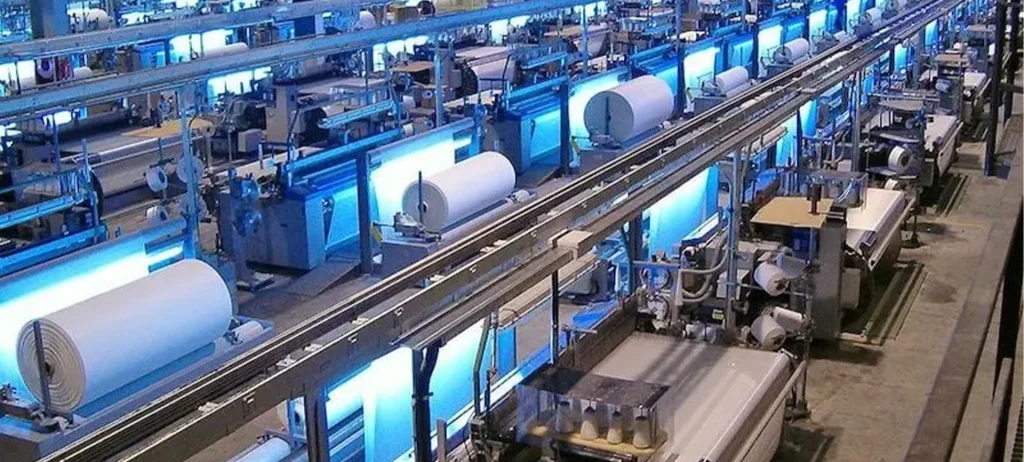
Digital transformation and automation are gaining momentum in textile factories: the use of artificial intelligence for quality control, automated production lines, digital printing of fabrics.
Circular economy and textile recycling have become a fundamental pillar of the industry, especially in developed countries.
1.3 Global Challenges
Unused capacity: Capacity utilisation globally is reported to be around 72–73%, indicating that there is still a lot of empty space.
Concerns such as weak demand (62% of companies) and “geopolitical risks” (41%) top the list of challenges.
Environmental regulations, rising energy and raw material costs, and supply chain fluctuations have also placed serious pressures on the industry.
2.Status of the Textile Industry in Iran
2.1 Data and Performance
According to reports, Iran's textile industry grew by 17.1% in 1401 (2022).
Iran's textile exports in the period from March 2023 to March 2024 were about $560 million, while imports were reported to be about $2.2 billion.
In particular, provinces such as Isfahan have a major share in textile production; for example, more than 9,800 industrial units, 2,300 registered factories, and a large share in production are said to be involved.
2.2 Structural situation, strengths and weaknesses
Advantages
Iran's relatively cheaper labor and existing production capacities can be a strong point. For example, a report from Iran shows that cotton consumption has grown significantly and Iran is among the 15 largest consumers in the world.
The heritage of producing traditionally designed fabrics, the diversity of domestic and regional production sources (e.g. carpet textiles, machine-made carpets, textile printing) can create an advantage for specific markets.
Investment opportunity: Some sources say that Iran's textile sector has an investment capacity of up to $1 billion if the right business environment is provided.
Weaknesses
High dependence on imports: In Iran, imports of fabrics, yarn, raw materials, and textile machinery are high. For example: Fabric imports in 2023 reached about $612.764 million, which is a decrease compared to the previous year but is still high.
Machinery and technology are often old; reports say the average age of Iranian textile machinery is over 15 years.
The widespread presence of unofficial imports and smuggling in the Iranian textile market, which weakens domestic production.
Banking restrictions, sanctions, import tariffs, and exchange rate fluctuations hinder international competitiveness. For example, one of Iran's trade problems is limited banking channels.
2.3 Iran's Special Opportunities
Given that Iran's exports to Iraq, Afghanistan, and Russia have had a significant share (26%, 18%, and 6%, respectively) of the country's export markets
The possibility of promoting domestic production in lower chains (yarn, fabric, dyeing) which can reduce imports and create higher added value for Iranian producers. According to officials, imports can be reduced with small investments in the weaving sector.
Local markets: Growing consumption of domestic textiles and changing consumer behavior towards domestic brands and products can be an opportunity for development. Also, online textile shopping is also a growing trend in Iran.
3. Analysis of opportunities and challenges
3.1 Opportunities
Increasing demand for specialty: Given the growth of technical, performance-oriented, and technical textiles (such as medical, industrial, and sports textiles), textile manufacturers can move toward these areas, which are less competitive and have more added value.
Smart Technology and Manufacturing: Entering manufacturing using automation, digital printing, custom manufacturing, reducing water and chemical costs; these can create a competitive advantage.
Compatibility with the circular economy: Paying attention to textile recycling, reducing waste, reusing fibers; manufacturers can increase access to demanding export markets by branding themselves as "green" and with social responsibility labels.
توسعه در زنجیره ارزش: ارتقای تولید داخلی در مراحل پایینتر (نخ، ریسندگی، بافندگی، رنگرزی) در ایران میتواند وابستگی به واردات را کم کند، ارزش افزوده بیشتر ایجاد کند و اشتغال را افزایش دهد.
Neighboring and regional markets: Iran can act as a supplier to regional markets (Middle East, Central Asia) with its geographical advantage, labor cost, and connectivity to logistics routes.
3.2 Challenges
Fierce international competition: Manufacturers from India, Pakistan, Bangladesh, Turkey, and China are operating with lower costs, more complete supply chains, and larger markets; Iran should be able to create a distinct competitive advantage.
Cost of raw materials and energy: Exchange rate fluctuations, high cost of importing raw materials and energy increase production costs and reduce profit margins.
Sanctions and Banking Issues: Restrictions on financial transfers, foreign trade insurance, licensing, and export tariffs are major obstacles to Iranian exports.
Outdated technology and lack of skilled labor: Much of Iran's textile machinery is worn out and needs renovation; there is also a shortage of skilled labor in emerging technologies.
Changes in environmental regulations: Global and even local manufacturers are facing increasing pressure from environmental regulations, water consumption, chemical use, waste management; for example, the consumption and production of fast fashion clothing causes environmental damage.
Uncertain demand and excess capacity: As the ITMF report shows, the utilized capacity is still around 72%, meaning the industry is facing excess capacity and demand is not rising rapidly.
4.The future horizon of the textile industry and recommendations for Iran
4.1 Key Future Trends
Increase in the production of technical and specialty textiles: The production of textiles such as protective, sports, ergonomic, and specialty clothing is expected to grow; companies should enter these sectors.
More focus on going online and selling online: Consumers have moved towards purchasing textiles online, and this trend has also been seen in Iran.
Green Economy and Sustainable Production: Investment in low-water processes, recycling, alternative fibers such as recycled fibers, organic fibers, combining traditional art and design with technology will become more important.
Shorter and more local supply chains: With global fluctuations, local and regional production will become more important with access to markets and reduced logistics costs.
"China + One" Strategy: Many global brands and buyers are trying to reduce their dependence on China and turn to other countries; Iran can be one of the destinations by providing competitive conditions.
4.2 Recommendations for Iranian textile industry activists
Investing in technology modernization
Upgrading machinery, digitizing production lines, digital printing of fabrics, using data mining for demand forecasting and inventory management.
Take advantage of government incentives (if available) for new technology.
Focus on specialized areas
Adding focus to the production of high value-added textiles such as technical/specialty, sportswear, and export of designed textiles combining tradition and modernity.
Regional focus on provinces that have capacity (such as Isfahan, Yazd, Mashhad) and the creation of industrial clusters.
Improving export and supply chain conditions
Working on reducing dependence on imports of raw materials and machinery, using domestic or regional suppliers.
Improving packaging quality, international standards, Iranian branding for regional and international markets.
Using Iran's geographical advantage (proximity to Iraq, Afghanistan, Central Asian countries) for exports.
Paying attention to environmental sustainability and green marketing
Adopting environmental standards, reducing water consumption, using less polluting materials, and smart waste management.
"Locally produced - environmentally friendly" branding can attract customers who are sensitive to this issue.
Exploiting new trends such as recycling used fabrics and combining them with native Iranian art.
Human resource development and product design
Training a workforce specialized in new technologies, textile design, fashion, and digital printing.
Collaboration with universities and research centers for innovation in the textile industry.
Developing in-house design to reduce dependence on imported design.
Policy and regulatory coordination
The need for coordination between the government, industry associations, and manufacturers to create targeted support policies.
Control unofficial imports, promote trade transparency, facilitate banking conditions, and take advantage of domestic production opportunities.
5. Conclusion
The global textile industry is at a turning point; new technologies, demand for specialized textiles, and environmental pressures are all helping to change the direction of the industry. In Iran, while there are serious challenges (from high imports, worn-out machinery, banking problems, and sanctions), there are also significant opportunities that can be transformed into growth with the right approach.
For Iranian actors, the path to success will be a combination of technological modernization, a focus on local and regional advantages, export promotion, and a serious focus on sustainability. If the infrastructure (technology, labor, regulations) can be improved, Iran’s textile sector can not only supply the domestic market but also gain a larger share in the regional market and beyond.
Finally, it is recommended that every textile company or industrial complex formulate a long-term strategy of at least 5 years that includes "value-added production", "branding", "export development", and "sustainability"—because the era of mass production only at low prices is slowly passing, and the future will be with smart, technology-based, and sustainable production.